Ask five dog owners how often a dog needs a bath and you will get five answers, from every week to twice a year, each delivered with confidence. The honest answer depends on skin, coat, and what the dog actually does all day. A Lincolnton dog that swims, rolls in red clay mud after thunderstorms, and sleeps on the bed needs a different schedule than one that walks on pavement and naps indoors.
Over-bathing is a real problem, but so is under-bathing a dog with an oily coat or a skin condition. This decision guide sorts dogs by situation rather than by a single calendar rule, which is how groomers at Soapy Paws Grooming think about it when they set up baths and blow-outs.
What a bath does to skin and coat
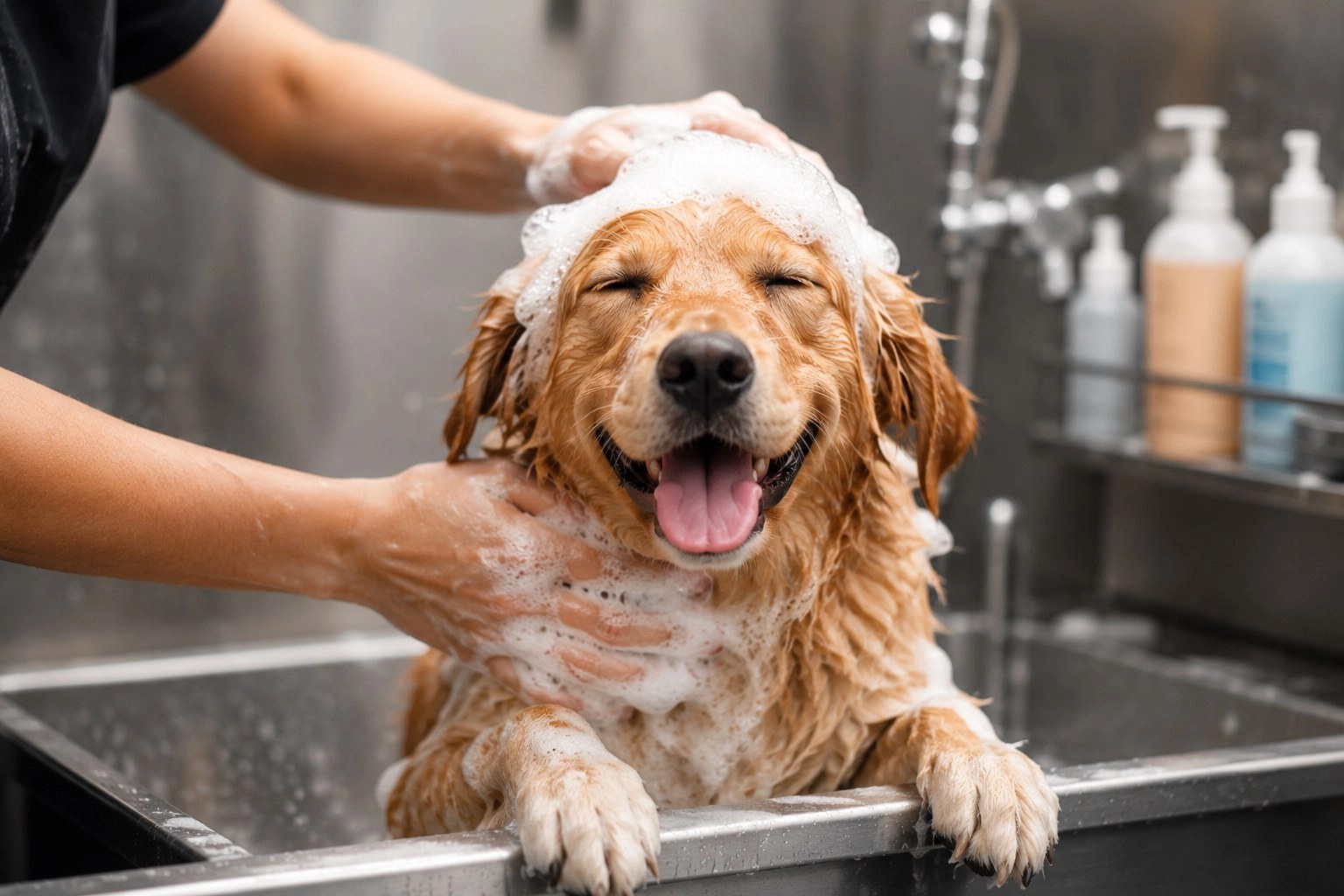
Bathing removes dirt, loose hair, pollen, and the oils the skin produces. Some of that oil needs to go; too much makes a coat look dull and smell stale. Removing too much, too often, with the wrong product strips the skin barrier and leaves a dog dry, flaky, and itchier than before the bath. Dog skin is thinner and less acidic than human skin, which is why dog shampoo matters. Human shampoo, including baby shampoo, is formulated for a different pH and can dry a dog's skin with regular use.
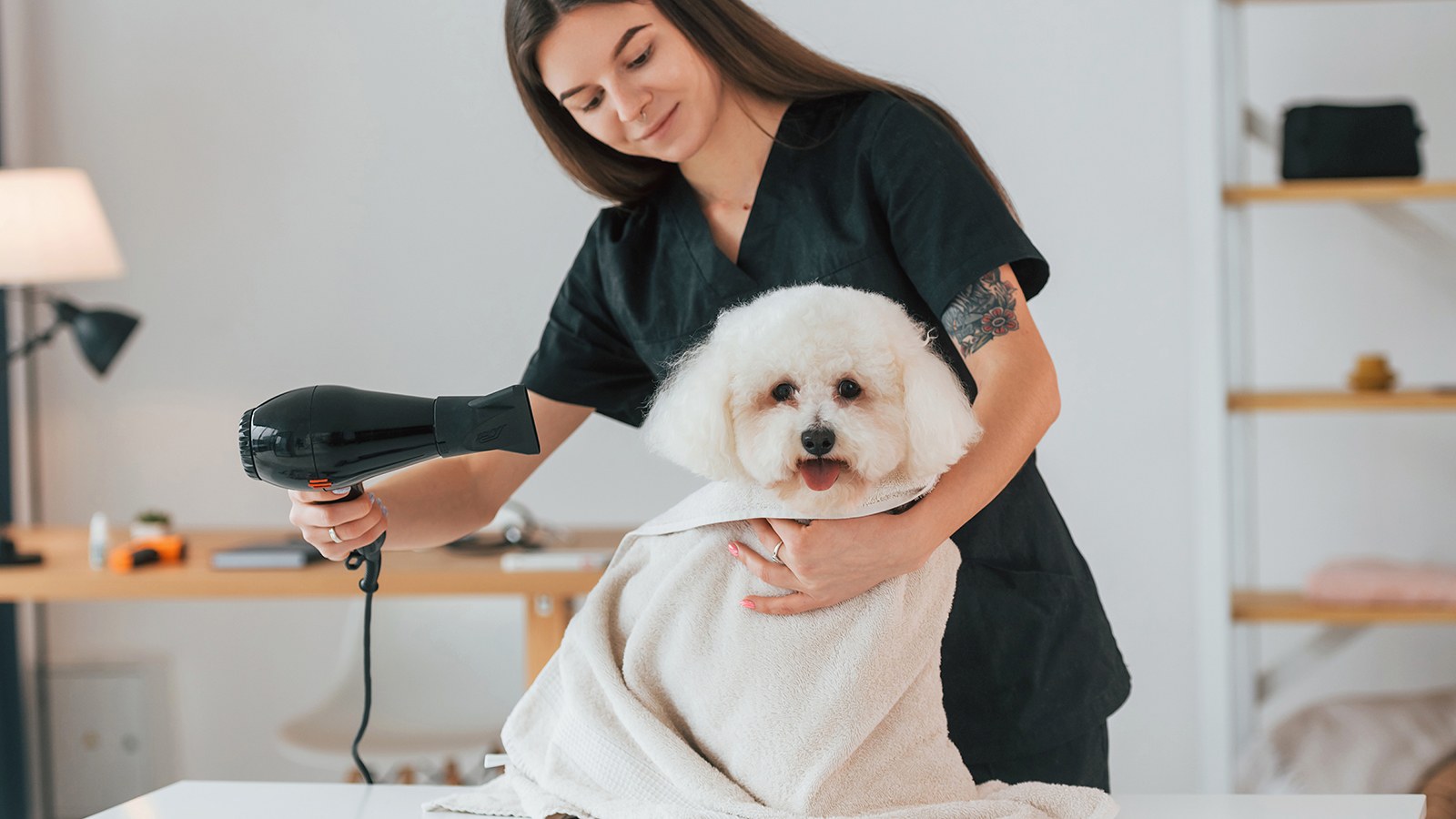
Technique matters as much as frequency. Lukewarm water, a full rinse, and complete drying prevent a lot of trouble. Soap residue left in a thick coat irritates skin, and a damp undercoat that never quite dries can smell musty and mat faster.
Choosing a schedule by situation
| Your dog's situation | Typical bath interval | Notes |
|---|---|---|
| Average adult dog, normal skin, mostly indoors | Every 4 to 6 weeks | Brush between baths and spot-clean feet and mud as needed. |
| Active outdoor dog, swimmer, daycare regular | Every 2 to 4 weeks | Rinse with plain water after swims or mud; save shampoo baths for real dirt and odor. |
| Oily or odor-prone coat, such as many hounds and spaniels | Every 2 to 3 weeks | These coats rebuild odor quickly; a consistent schedule beats occasional marathon baths. |
| Dog with a vet-diagnosed skin condition | As the veterinarian directs | Medicated baths are treatment, sometimes weekly or more, and the vet's schedule overrides general advice. |
| Puppy | When dirty, with gentle products | Short, warm, calm baths build good associations; avoid chilling and harsh products. |
| Senior or dry, flaky skin | Every 6 weeks or as advised | Use mild or moisturizing products and watch whether bathing improves or worsens the flaking. |
Treat the table as a starting point, then adjust by evidence. If the coat still looks and smells clean at the interval you picked, you can stretch it. If odor and itch arrive well before bath day every cycle, shorten it or ask whether something else is going on.
The itchy dog problem
Itching is the symptom that sends owners to the tub most often, and bathing is a mixed answer. A bath does wash off pollen and other allergens sitting on the coat, which genuinely helps many Piedmont dogs in spring and fall. But if the itch comes from dry skin, extra baths make it worse, creating a loop: the dog itches, gets bathed, dries out more, and itches harder.
Break the loop by watching the pattern. Itching that improves for a day or two after a bath suggests surface allergens. Itching that is worse right after baths suggests the product or frequency is the problem. Constant itching with redness, odor from the skin, ear trouble, or hair loss needs a veterinarian, because allergies, yeast, and infection all itch and none of them are fixed by shampoo choice alone.
Between baths: the maintenance that stretches the schedule
Brushing is the highest-value habit between baths. It removes loose hair and dirt, distributes skin oils through the coat, and lets you find lumps, ticks, and sore spots early. Wipe muddy feet at the door, rinse a dog that has rolled in something with plain water, and wash bedding regularly, since a clean dog on a dirty bed smells dirty again fast.
Ears deserve a note here. Bath water in the ears bothers some dogs and can contribute to ear trouble in dogs already prone to it. Keep water out where you can, dry the outer ear after, and let a veterinarian handle any ear with odor, discharge, or head shaking.
A simple rule to finish with
Set a default interval from the table, write it down, and judge by the dog in front of you rather than by habit or guilt. Clean, comfortable skin and a coat that brushes out easily mean the schedule fits. Persistent odor, flakes, or itch mean the schedule, the product, or the dog's health needs a second look.
Common questions
Can I bathe my dog every week?
Some dogs tolerate weekly baths with a mild dog shampoo, and medicated schedules sometimes require it. For an average dog it is usually more than needed and can dry the skin, so watch for flaking and itch.
Is human shampoo okay for dogs?
Not as a routine. Dog skin has a different pH from human skin, and human products used regularly can leave a dog dry and itchy. Use a shampoo made for dogs.
Why does my dog smell again a few days after a bath?
Common causes are an oily coat type, skin or ear infection, dirty bedding, or a coat that was not rinsed and dried fully. Odor that returns fast and strong is worth a vet visit.
Photos in this guide are representative stock images.
← All guides from Soapy Paws Grooming← Back to Soapy Paws Grooming