Mats rarely appear overnight, even when it feels that way. A mat is the end of a process: loose hair sheds into the coat, friction works it into a tangle, moisture and dirt tighten it, and time compacts it against the skin. By the time a comb will not pass, that process has usually been running for weeks.
Understanding the timeline matters in Lincolnton because the Piedmont year keeps feeding it. Rain, swimming, pollen season mud, and heavy shedding all speed matting up. This calendar view from Soapy Paws Grooming shows when mats form, where they start, and where the humane limit on removing them sits.
Where mats start, and why there
Friction spots mat first: behind the ears, under the collar, in the armpits, where a harness rubs, at the backs of the thighs, and in the tail and beard of longer-coated dogs. Those areas move constantly, the hair is often finer, and owners brush them least because the dog objects or the spots are easy to miss. Any coat type can mat, but curly, wavy, and double coats with shed undercoat trapped inside are the most prone. Doodle and poodle coats, which Soapy Paws grooms often, combine several risk factors at once: curl, length, and hair that sheds into the coat instead of falling out.
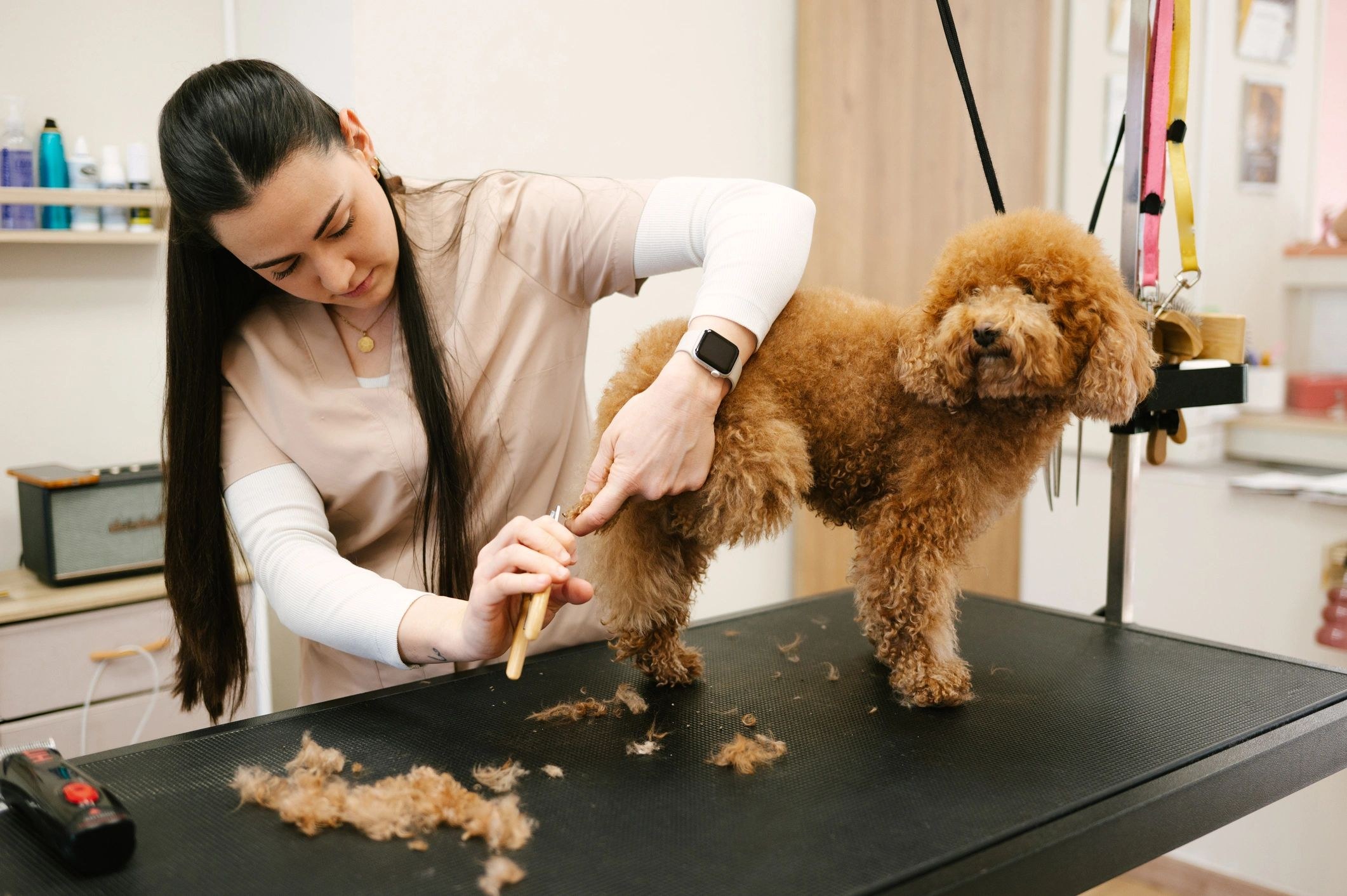
A year of matting risk
| Season | What drives matting | What to do |
|---|---|---|
| Early spring | Winter undercoat begins to shed into the coat; pollen and mud add grit | Start de-shedding and line brushing before the coat blows, not after tangles set. |
| Late spring and summer | Swimming, rain, and humidity swell and tighten tangles; dogs are bathed more, sometimes without full brushing first | Brush and comb out before baths, dry fully after swims, and check friction spots weekly. |
| Fall | Second coat blow; hurricane remnants bring long wet stretches | Repeat the spring routine; do not let a damp undercoat sit for days. |
| Winter | Longer coats kept for warmth, sweaters and collars rubbing, less grooming booked in busy months | Keep the brushing schedule even if haircuts pause; check under collars and clothing. |
| Every 1 to 2 weeks, all year | Loose hair accumulates in friction spots between grooms | Comb to the skin in the trouble spots; a brush over the top alone misses early mats. |
Why bathing a matted dog makes it worse
Water tightens mats. Hair swells, the tangle felts as it dries, and a mat that might have brushed out dry becomes a solid pad. The rule groomers repeat is brush out first, then bathe. If you cannot get a comb through a coat before the bath, the bath will not rescue it. The same logic applies after swimming: a quick brush and full dry on the same day prevents the felted result that shows up a week later.
The limits of dematting
Light tangles brush out with patience, a slicker brush, a metal comb, and work in small sections. A true mat is different. Pulling it apart means repeated tugging on skin that is already irritated underneath, and mats hold moisture and debris against the skin, sometimes hiding redness, sores, or infection. Dematting a heavily matted dog can take a long time and hurt throughout, and brushes and dematting tools can cut or burn skin in unpracticed hands.
That is why groomers draw a humane line. When mats are tight to the skin over large areas, the kind choice is to clip them out and take the coat shorter than planned, even when the owner had a longer style in mind. Hair grows back in weeks. A dog that learns grooming hurts may carry that fear for years, and that trade is not worth a haircut's appearance. Most groomers will show you the mats, explain what can be saved, and agree the plan before starting.
Preventing the next round
Prevention is unglamorous and effective. Brush and then comb, because the comb is the test: if a metal comb passes to the skin, the coat is truly clear. Keep a realistic length for the time you actually have; a shorter coat maintained well beats a long coat maintained hopefully. Book grooms on a steady interval for mat-prone coats rather than waiting for trouble, and ask the groomer to show you your dog's specific friction spots, since those vary by dog.
If you find a small mat at home, work it from the outer edges with your fingers, then a brush, in short sessions. Never cut a mat out with scissors held against the skin. Skin tents up into mats and scissor cuts are a common and preventable injury; clippers slide under safely in a way scissors do not.
Common questions
Can all mats be brushed out if I am patient enough?
No. Light tangles can, but tight, felted mats close to the skin often cannot be removed without hurting the dog. Clipping those out is the humane option groomers recommend.
Why did my groomer shave my dog shorter than I asked?
Usually because mats were tight to the skin over enough of the body that dematting would have been painful and long. Ask to see the mats and agree on a prevention and length plan for next time.
How do I know if my dog has mats I cannot see?
Run a metal comb through to the skin, especially behind the ears, under the collar, and in the armpits. If the comb snags and will not pass, there is matting even if the top looks smooth.
Photos in this guide are representative stock images.
← All guides from Soapy Paws Grooming← Back to Soapy Paws Grooming